Guterres at World Artificial Intelligence Conference 2026: Make AI a Force for Shared Human Progress
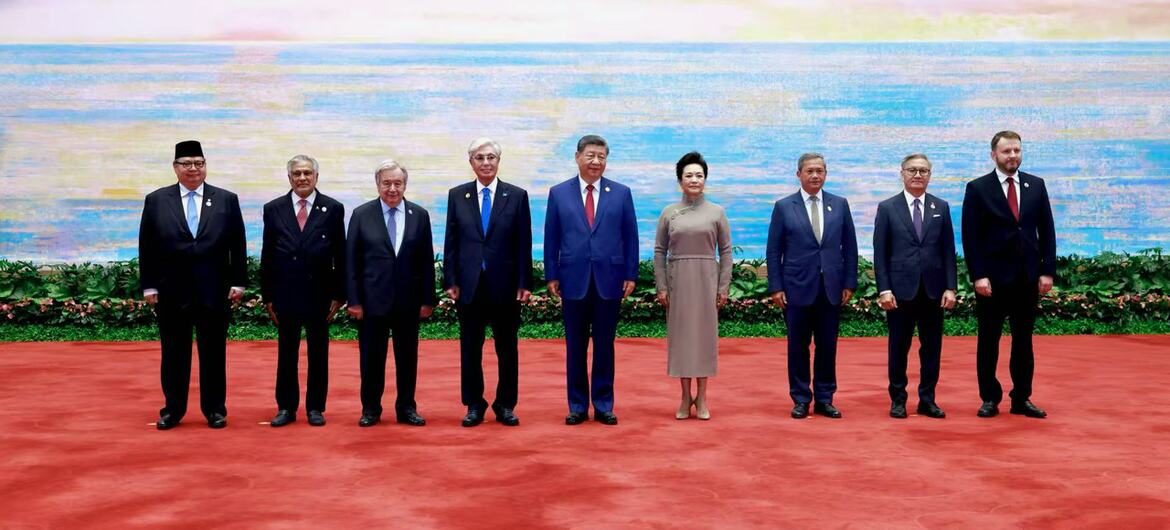
Times Square Global Live — United Nations Secretary-General António Guterres told the opening ceremony of the World Artificial Intelligence Conference 2026 in Shanghai that artificial intelligence could become one of humanity’s greatest opportunities—or one of its greatest risks—in the 21st century.
He stressed that a technology capable of shaping humanity’s future must itself be shaped by all humanity, rather than controlled by a small number of countries or corporations. The international community, he said, must strengthen cooperation to ensure that AI advances inclusion, shared prosperity and sustainable development.
Advancing Inclusive Global AI Governance
Guterres described international partnership as a central pillar of the Global Digital Compact, adopted by the United Nations General Assembly with China’s strong support.
The Compact affirms that every country—regardless of its size or level of development—should have a voice in shaping the future of artificial intelligence.
In accordance with the Compact, the Global Dialogue on AI Governance has been established to bring together governments, international organizations, technology companies, academic institutions and civil society.
Guterres emphasized its fundamental message: technology must serve humanity—not the other way around.
Harnessing AI to Advance Sustainable Development
The Secretary-General highlighted AI’s enormous potential to accelerate medical breakthroughs, transform education, strengthen food systems, improve agricultural productivity, create new industries and generate decent employment.
Used responsibly, AI could become a powerful instrument for advancing the United Nations Sustainable Development Goals. However, Guterres warned that this potential would not be realized if emerging technologies reproduced or deepened existing inequalities.
Around one-third of the world’s population remains without internet access, while many countries continue to face major gaps in connectivity, digital infrastructure and reliable energy. Computing power, data resources and technical expertise remain concentrated in relatively few countries and companies, and much of the world’s private AI investment does not reach developing economies.
Without coordinated international action, Guterres warned, AI could widen inequalities in income, opportunity and security while further deepening the divide between the Global North and Global South.
Strengthening AI Capacity in Developing Countries
Guterres said China could play an important role in advancing a more inclusive approach to artificial intelligence.
More than 20 countries, including China, have responded to an invitation to nominate support centers for a United Nations-backed global network for AI capacity-building and cooperation. The Secretary-General also announced that he would soon present a proposal for a Global Fund for AI, urging governments and other stakeholders to support both initiatives.
Developing countries possess abundant talent, innovative potential and large young populations, he noted. They should receive the resources needed to build their own AI capabilities and develop technology suited to their national priorities, data, languages and communities.
Guterres also recognized China’s role in advancing the first United Nations General Assembly resolution on international cooperation in AI capacity-building, which was adopted by consensus.
Three Priorities for the Global Community
To ensure that every country can benefit from the AI revolution, Guterres identified three global priorities: capacity-building, safety and sustainability.
On capacity-building, he called for stronger partnerships with developing countries, greater access to open models and affordable computing resources, and expanded technical education and professional training.
On safety, he stressed that AI systems operating across borders require standards that also extend across borders. Governments and other stakeholders should develop common approaches to testing, risk assessment and accountability, supported by an inclusive and interconnected governance framework grounded in international law.
AI development must respect and protect human rights, Guterres said. Decisions involving life and death must always remain under meaningful human control, and no AI system should be placed in the hands of children before its safety has been adequately demonstrated.
On sustainability, he noted that AI can help manage power grids, integrate renewable energy and reduce waste. At the same time, the industry’s growing demand for energy, water and land must be fully transparent.
Guterres called on major AI companies to disclose the complete environmental footprint of their systems and work toward operating entirely on renewable energy by 2030. He also urged governments to incorporate the clean-energy requirements of artificial intelligence into their national energy planning.
A Test of International Solidarity
Guterres said the central question is no longer whether artificial intelligence will change the world, but what kind of change it will bring.
Will AI narrow inequality or widen it? Will it concentrate power or expand opportunity? Will its benefits be shared by every country, or reserved for only a few technological leaders?
This is not simply a test of technological capability, he said—it is also a test of international solidarity.
The Secretary-General called on governments, international organizations, technology companies, researchers and civil society to work together to make artificial intelligence a force for human dignity, equal opportunity, shared progress and sustainable development.
Times Square Global Live will continue to follow the development of artificial intelligence, United Nations digital-governance initiatives and international technology cooperation, bringing timely and professional global news coverage to audiences worldwide.
Times Square Global Live
New York, United States

 中文
中文  ENGLISH