Could FIFA President Gianni Infantino Become the Next UN Secretary-General?Trump's Reported Support Highlights the Growing Intersection of Sports, Diplomacy, and Global Politics*
By Times Square Global Liv | New York
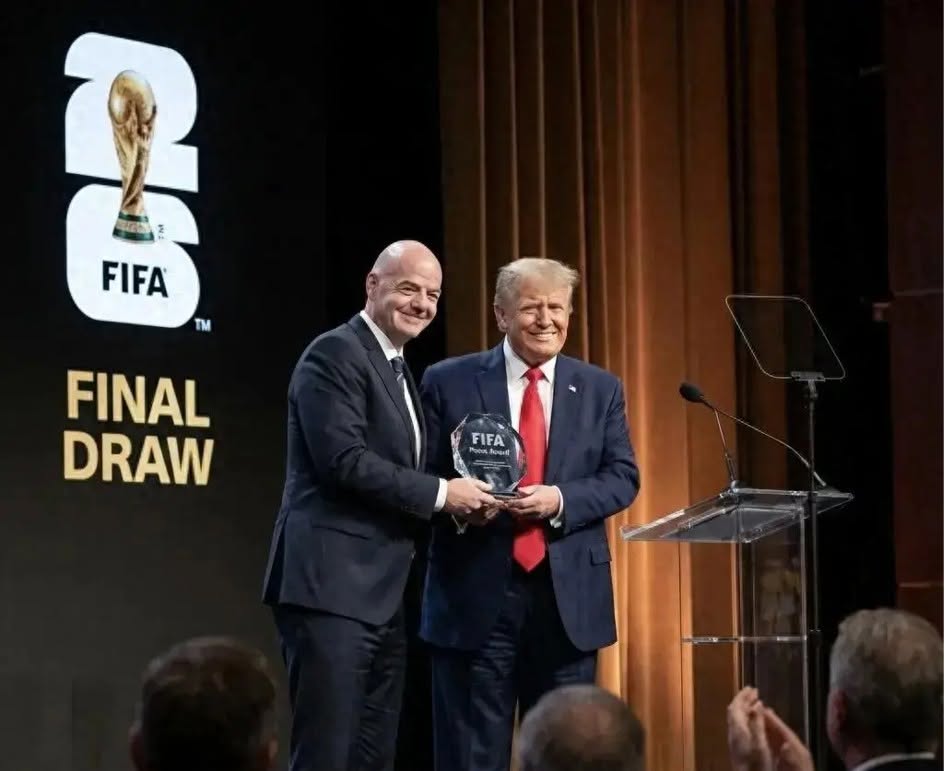
As the 2026 FIFA World Cup concludes, attention is rapidly shifting from the football pitch to the international political arena.
According to an exclusive report published by the *New York Post* on July 21, U.S. President Donald Trump is reportedly encouraging FIFA President **Gianni Infantino** to pursue the position of the next Secretary-General of the United Nations after the current Secretary-General, António Guterres, completes his term on December 31, 2026.
The report, citing sources close to Trump, suggests that the President believes Infantino possesses an unparalleled global profile and a unique ability to connect nations through sport.
At present, however, the report remains unconfirmed. Neither Infantino nor the White House has announced any intention to launch a campaign, and no UN Member State has formally nominated him.
Most importantly, the President of the United States does **not** have the authority to appoint the UN Secretary-General.
From Football Leadership to Global Governance?
The speculation reflects more than personal political support.
During the successful staging of the expanded 2026 FIFA World Cup across the United States, Canada, and Mexico, Trump and Infantino appeared together on numerous occasions, underscoring the close cooperation between FIFA and the host governments.
With 48 participating nations and 104 matches—the largest World Cup in history—the tournament demonstrated football's extraordinary ability to bring together governments, businesses, international organizations, and billions of people across political and cultural boundaries.
Supporters argue that Infantino's leadership of FIFA, representing 211 member associations, has given him extensive experience managing one of the world's most complex international organizations—one whose global reach even exceeds the UN's 193 Member States.
From this perspective, proponents see him not simply as a sports executive but as a global institution builder with experience navigating competing national interests and maintaining relationships with world leaders.
## The UN Is Not a Sporting Organization
Nevertheless, managing international football and leading the United Nations require fundamentally different skill sets.
The UN Secretary-General serves as the world's chief diplomat, responsible for mediating armed conflicts, promoting peace, coordinating humanitarian assistance, advancing sustainable development, and preserving international law while maintaining the confidence of countries with vastly different political systems.
Unlike FIFA, where executive leadership is largely organizational, the United Nations demands constant political neutrality and exceptional diplomatic judgment under intense geopolitical pressure.
Global recognition may create visibility, but it cannot substitute for the independence and credibility required to lead the world's foremost multilateral institution.
Trump's Endorsement: An Asset—or a Liability?
Trump's reported support may elevate Infantino's international visibility, but it could also complicate any future candidacy.
In recent years, Infantino's close relationship with Trump has drawn criticism from some European football officials, human rights organizations, and political observers, who have questioned whether FIFA has maintained sufficient political neutrality.
These concerns illustrate a broader challenge facing any potential candidate.
The next UN Secretary-General must earn the confidence not only of the United States but also of China, Russia, Europe, the Global South, and the broader UN membership. Any perception of excessive alignment with one major power could raise concerns about impartiality during the selection process.
## A Challenging Road to the UN's Highest Office
Even if Infantino were to enter the race, the path would be highly competitive.
Under the UN Charter, candidates must first be formally nominated by one or more Member States. The UN Security Council then recommends a single candidate, subject to the veto power of its five permanent members, before the General Assembly makes the final appointment.
This process is driven by diplomacy, regional balance, political consensus, and broad international confidence—not by the endorsement of any single national leader.
Moreover, many governments and diplomats continue to advocate for the election of the first woman Secretary-General or for greater regional representation, adding further political complexity to the next selection process.
Sports Diplomacy Is Expanding Beyond the Playing Field
Regardless of whether Infantino ultimately becomes a candidate, the discussion itself reflects a significant evolution in international affairs.
Major sporting events such as the FIFA World Cup and the Olympic Games have increasingly become platforms for diplomacy, economic cooperation, public engagement, and international dialogue.
Sport possesses a rare ability to transcend borders, languages, religions, and political systems. In times when traditional diplomacy encounters obstacles, sporting exchanges can open alternative channels of communication and mutual understanding.
Yet this growing influence also carries responsibility.
For sports diplomacy to contribute meaningfully to global peace and cooperation, it must remain grounded in transparency, fairness, institutional independence, and respect for international norms. Excessive political alignment risks undermining the credibility of both sporting institutions and the multilateral system they seek to complement.
Editorial Perspective
Whether or not Donald Trump ultimately supports Gianni Infantino's candidacy, the discussion reveals an important shift in global leadership thinking.
Today's world increasingly values individuals capable of communicating across cultures, mobilizing international networks, and managing complex global institutions.
Infantino undoubtedly possesses many of these qualities.
However, the United Nations is fundamentally different from the FIFA World Cup.
Its Secretary-General is expected to navigate war and peace, humanitarian crises, climate challenges, geopolitical rivalries, and sustainable development while preserving the integrity of the international system.
Public recognition may open the door to global leadership.
But lasting legitimacy depends on diplomatic independence, political judgment, moral credibility, and the ability to build consensus among nations with profoundly different interests.
Whether Gianni Infantino could successfully make that transition remains uncertain.
What is already clear is that the legacy of the 2026 FIFA World Cup extends well beyond football. It has sparked a broader conversation about the evolving relationship between sports, diplomacy, and global governance.
And that conversation may only be beginning.
 中文
中文  ENGLISH