| 联系我们 |

Tel:347-721-5583
Email:ustsgl@yahoo.com
网址:www.ustsgL.com
|
|
|
| 新闻动态
- 焦点报道 |
World Peace Award Conference 2026 in Sweden |
World Peace Award Conference 2026 in SwedenFrom Stockholm to Tallinn: Taking Peace Beyond the Conference HallBy Winny Power | USTSGL – Times Square Global Live**Stockholm, Sweden**STOCKHOLM — The World Peace Award International Conference 2026, held in Stockholm from August 21 to 25, brought together peace advocates, Buddhist leaders, representatives of civil society organizations, humanitarian figures, and international participants from different countries and cultural backgrounds.From discussions inside the Stockholm Concert Hall to a Walk for Peace through the city, and later a journey across the Baltic Sea to Tallinn, Estonia, the gathering raised a question far more important than the presentation of any award:In a world increasingly shaped by conflict, division and uncertainty, how do we learn to live peacefully with one another again?That may ultimately be the more enduring message of the World Peace Award Conference 2026.Peace Beyond Speeches and CeremoniesA major conference program was held on August 22 at the Stockholm Concert Hall, one of Sweden’s best-known cultural landmarks.The conference centered on the theme:**“Peace on Earth – Peace with the Earth.”**It also invited participants to consider a fundamental question:“How Can We Create a Culture of Peace?”The question is particularly relevant today.The world is once again confronting armed conflicts, geopolitical rivalry, religious and cultural divisions, social polarization, economic inequality and an information environment capable of connecting humanity instantly while also amplifying misunderstanding.We have technologies that allow people on opposite sides of the planet to communicate within seconds. Artificial intelligence can translate languages almost instantly.Yet understanding one another remains one of humanity’s greatest challenges.Peace, therefore, cannot exist only at negotiating tables between governments.It must also be cultivated in schools, communities, religious institutions, civil society, the media and, ultimately, in the way individuals treat one another.Peace is not only a political condition. It is also a human capacity. From a Peace Award to a Culture of PeaceThe significance of a peace award should never be limited to the moment someone receives a certificate, medal or trophy.The more important questions are: What actions led to that recognition? And can those actions encourage others to believe that ordinary individuals can also contribute to peace?The Stockholm gathering combined an international conference with award presentations, interfaith dialogue, art and music, cultural exchange, youth engagement and the Walk for Peace.Together, these activities raised another important question:Who is responsible for peace?Governments?International organizations?Religious leaders?Civil society?Or ordinary people?Perhaps the answer is all of them.A sustainable culture of peace cannot be created by one institution, one religion or one political movement. It requires participation across society — from governments and international institutions to educators, faith communities, humanitarian organizations, journalists, young people and citizens.Peace is not something that can simply be declared.It is something a society must continuously practice. 3,700 Kilometers for PeaceOne of the most compelling stories connected with this year’s conference is the Walk for Peace associated with Venerable Bhikkhu PaññākāraDuring the Stockholm conference, Venerable Paññākāra received the World Peace Award 2026, recognizing his continuing work in promoting peace, compassion, mindfulness, humanitarian service and cross-cultural understanding.His peace journeys have extended across several countries, including the United States, Canada, Sri Lanka, Thailand, India and Nepal.Among the most remarkable was a journey across the United States — from Texas toward Washington, D.C.Approximately 2,300 miles.More than 3,700 kilometers.Months on the road.Instead of complicated political language, the participants chose one of the oldest and simplest human actions:They walked.Step after step.Through cities and rural communities.Across communities of different religions, ethnicities, cultures and political perspectives.People came out to greet the walkers. Some spoke with the monks. Some joined them for part of the journey. Others simply stood beside the road and offered a gesture of respect.These small encounters reveal something important about peace.When people genuinely meet one another, labels can begin to lose their power.Nationality, religion, ethnicity and political identity may remain different, but walking beside another human being creates a different kind of relationship.That is perhaps the deeper symbolism of the Walk for Peace:Peace must also be walked.Peace requires people willing to step forward. When Peace Leaves the Conference HallThe message did not remain inside the Stockholm Concert Hall.Peace activities continued through Stockholm, bringing participants into public spaces and connecting the conference with the life and culture of the city.That transition matters.A peace conference should ultimately be judged not only by what is said from a stage, but by what participants carry with them after leaving the room.When people of different nationalities, cultures and religious traditions walk together through a city, they make a simple public statement:Peace belongs to no single religion, culture or nation.It belongs to humanity.The true value of an international peace gathering therefore begins when the formal program ends — when participants return to their communities, institutions and countries and decide whether the principles discussed at the conference will become part of their everyday actions. Across the Baltic Sea: Stockholm to TallinnThe journey continued beyond Sweden.Participants traveled across the Baltic Sea toward Tallinn, Estonia, transforming the gathering from a conference in one European capital into a cross-border journey for peace.The Baltic passage also created space for interfaith and intercultural exchange.Buddhist chanting and Christian blessings could exist within the same journey. Participants from Asia, Europe, North America and other regions shared experiences, traditions and perspectives.The scene reflected a principle that the world too often forgets:Peace does not require us to become the same.Peace is not the elimination of difference.It is the ability to respect one another despite those differences.You may keep your faith, and I may keep mine.You may cherish your cultural traditions, and I may cherish mine.We may even understand the world in very different ways.Yet we can still sit at the same table.We can still walk together.And we can still share the hope that the next generation will inherit a world with less violence and greater understanding.That is the real value of intercultural dialogue. Civil Society and the Architecture of Peace
The conference also reflected the growing role of civil society in peacebuilding.Organizations associated with the international network surrounding the conference included the Union of Thai Missionaries in Europe, International Youth Society, WAT Buddharama Sweden and Track Nepal, among others.Their participation reflects a broader reality: peacebuilding does not occur exclusively within diplomatic institutions.Across Asia and other parts of the world, religious and civil society organizations are often directly involved in education, poverty reduction, humanitarian relief, support for women and children, community development and intercultural dialogue.Much of this work rarely reaches international headlines.Yet it frequently takes place exactly where peace must ultimately be built — at the community level.Because peace is more than the absence of war.A peaceful society should also mean that children have access to education; women can live with dignity and opportunity; people of different faiths can coexist; vulnerable communities can receive assistance; victims of disasters are not abandoned; and humanity learns to live more responsibly with the natural world.In that sense, “Peace on Earth” and “Peace with the Earth” cannot be separated.
The Next Generation and the Future of Peace
Another important dimension of the Stockholm gathering was the role of peace education and youth engagement.
Young people today are growing up in an unprecedented information environment.
Through a smartphone, they can witness a war unfolding thousands of miles away in real time. Within minutes, they can encounter radically different political, cultural and religious perspectives.
Technology has expanded the world.
But it can also expand prejudice.
Algorithms can connect people with similar beliefs while making it increasingly difficult to hear those who think differently.
Peace education for the next generation, therefore, must mean more than simply teaching that war is wrong.
It must develop a more difficult skill:
How to live with people who are different from us.
How to evaluate information critically.
How to respect another culture without abandoning one's own.
How to continue a conversation when disagreement becomes uncomfortable.
How to transform empathy into action.
And how to understand that humanity's relationship with the Earth cannot be based indefinitely on exploitation without consequence.
These may become some of the most important lessons we can offer the next generation.
USTSGL Perspective: Peace Ultimately Returns to the Human Being
From Stockholm to Tallinn, perhaps the deepest message of the World Peace Award Conference 2026 was not about an award at all.
It was about people.
Peace between nations ultimately depends on human beings learning to understand one another.
Peace between religions requires people of different faiths to be willing to listen to one another.
Peace between cultures requires us to value our own heritage while recognizing another person's equal right to value theirs.
And peace with the Earth requires humanity to reconsider its relationship with development, consumption, resources and future generations.
The world unquestionably needs diplomacy, international institutions and political agreements.
But peace will never be completed at a conference table alone.
It also happens in ordinary life:
In a conversation where disagreement does not become hatred.
In a handshake across religious or cultural boundaries.
In assistance offered to a stranger.
In a humanitarian response to people affected by disaster.
Or simply in the willingness to walk beside someone whose life and background are completely different from our own.
These actions may appear small.
But lasting peace ultimately has to return to the relationship between one human being and another.
## From Talking About Peace to Practicing It
The speeches inside Stockholm Concert Hall eventually ended.
Awards were carried home.
Delegates returned to their own cities, countries and communities.
But the real question begins after the conference:
How do we bring peace home with us?
If peace exists only on the stages of international conferences, it remains too distant from ordinary life.
If it enters our schools, communities, families, places of worship, media and daily choices, then peace has the possibility of becoming a culture.
From Stockholm to Tallinn, from the conference hall to the streets, from a 3,700-kilometer peace walk to interfaith encounters across the Baltic Sea, the message can perhaps be expressed most simply:
Peace is not only something we speak about.
Peace is something we practice together.
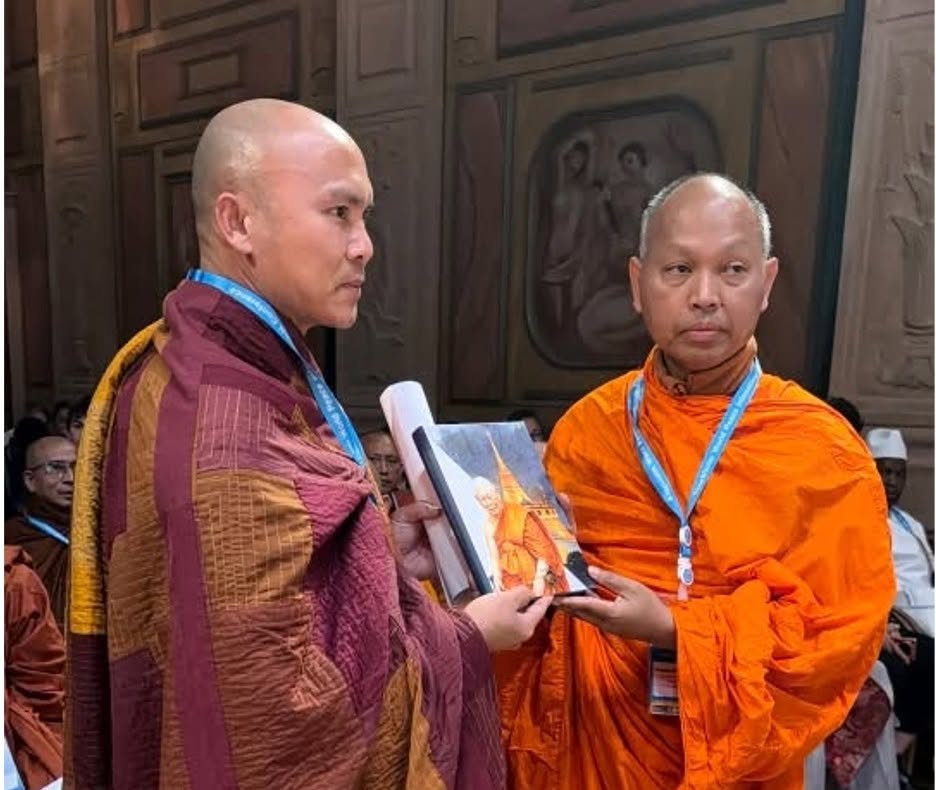
Dr. Phra Maha Boonthin Taosiri (right), Chairman of the Committee of the World Peace Conference 2026 and Abbot of Wat Buddharam Temple in Sweden, presents a book to Venerable Bhikkhu Paññākāra (left) during the World Peace Award Conference 2026 in Stockholm — a gesture of friendship, spiritual exchange, and their shared commitment to advancing peace.
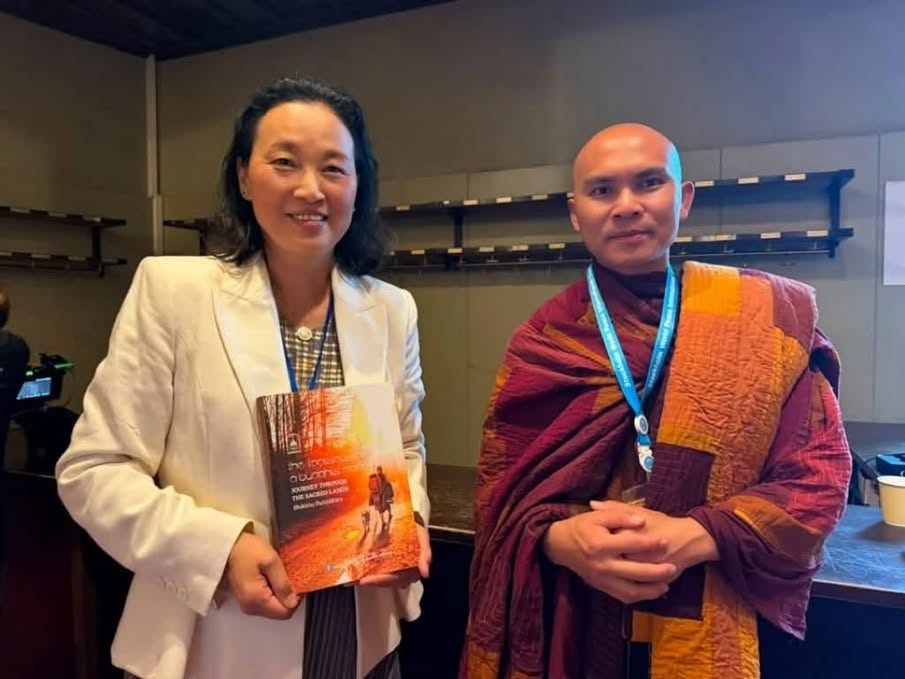
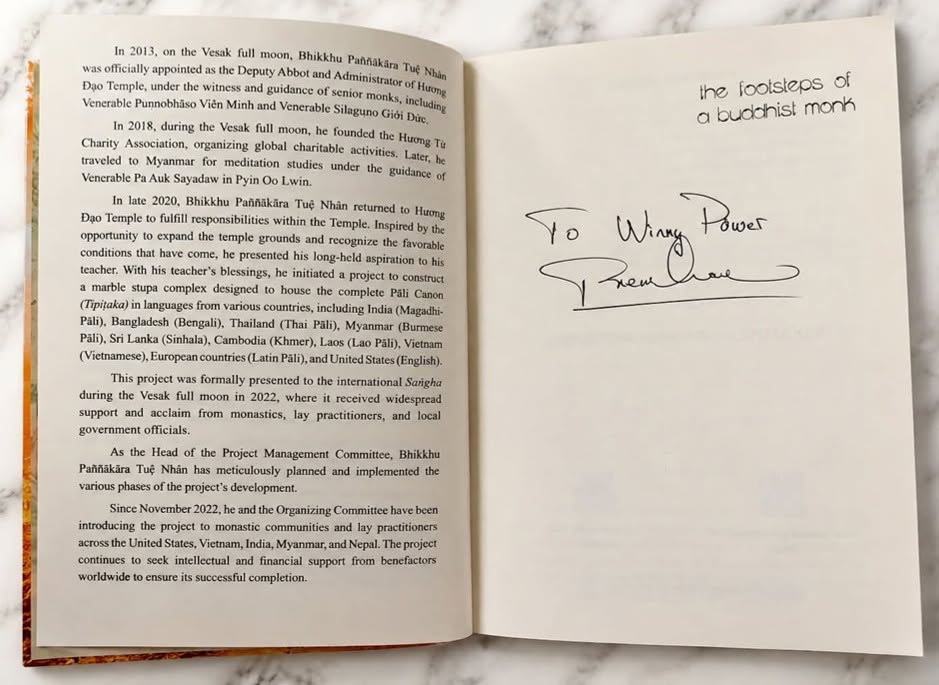
POWER DIALOGUE | A GLOBAL VOICE FOR PEACEA meaningful encounter in Stockholm: Winny Power (LEFT) of USTSGL with Venerable Bhikkhu Paññākāra ( RIGHT) during the World Peace Award Conference 2026. Their exchange reflected a central message of POWER DIALOGUE — peace begins with human connection, and dialogue can turn understanding into action. Venerable Paññākāra also personally signed The Footsteps of a Buddhist Monk for Winny Power.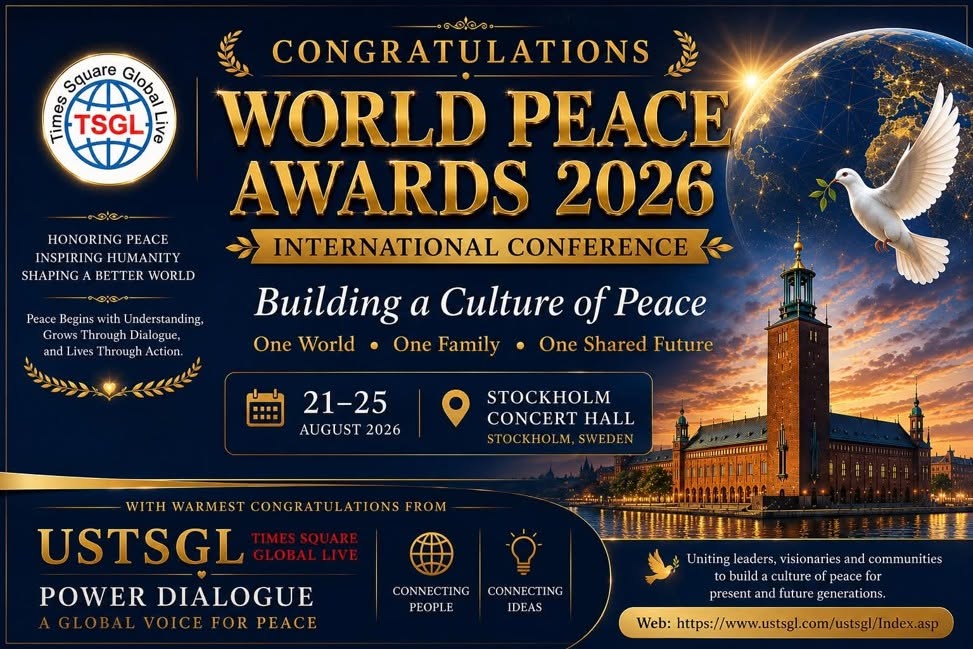 — Winny PowerUSTSGL | Times Square Global LiveStockholm, Sweden — Winny PowerUSTSGL | Times Square Global LiveStockholm, Sweden
|
|
 中文
中文  ENGLISH