Strategic Alignment in the Middle East: Leaders Coordinate to Contain Risks and Stabilize Global Energy Markets
By Winny Power
Founder & Editor-in-Chief, Times Square Global Live (TSGL)
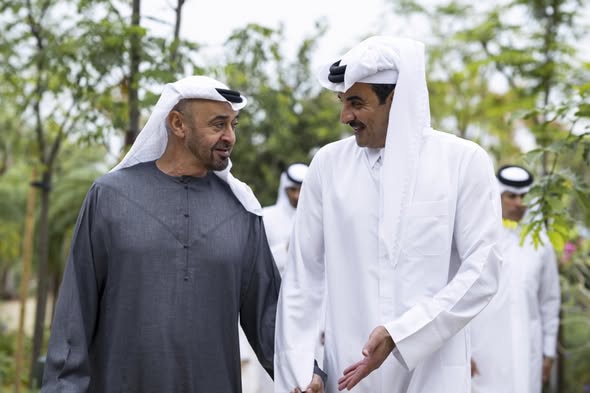
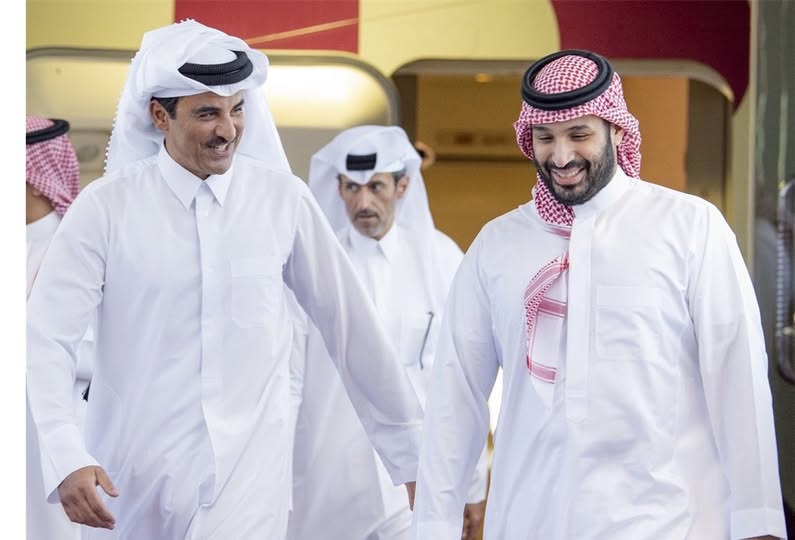
A series of high-level diplomatic engagements in late March among key Middle Eastern leaders is now being formally recognized as part of a broader effort to reinforce regional stability and safeguard global energy markets.
The visits, which took place on March 30–31, 2026, were officially acknowledged on April 6 by the Shura Council, underscoring their strategic significance amid rising regional tensions.
During the visit to Jeddah, His Highness the Amir held meetings with Mohammed bin Salman and King Abdullah II, followed by a visit to Abu Dhabi for talks with Mohammed bin Zayed Al Nahyan.
Strategic Coordination Beyond Routine Diplomacy
According to the Shura Council, these meetings reflect a clear intention to intensify coordination, unify positions, and support peaceful pathways to contain escalation.
“These visits demonstrate His Highness’s keenness to enhance security and stability in the region through coordination and consultation,” the Council stated.
Rather than routine diplomatic exchanges, analysts view these engagements as part of a coordinated regional response to evolving geopolitical risks, including ongoing tensions that could affect security and economic stability.
Containing Escalation and Reinforcing Sovereignty
The statement emphasized key priorities shared among regional leaders:
Preventing further escalation of tensions
Safeguarding national sovereignty
Protecting the interests of their peoples
Supporting diplomatic and peaceful solutions
“Unified positions among brotherly and friendly countries are essential to maintaining stability,” the statement noted.
This reflects a broader effort to maintain internal alignment among Gulf and neighboring states in a rapidly shifting geopolitical environment.
Energy Security at the Center of Strategic Dialogue
A central theme of the discussions was the stability of global energy supply—an issue with far-reaching implications.
“These efforts contribute to safeguarding energy supply stability and maintaining balance in global markets,” the Council added.
As key global energy producers, Middle Eastern nations are increasingly coordinating not only on security matters but also on energy market stability, a factor critical to global economic resilience.
🌍 Why It Matters Now
While the visits themselves occurred days earlier, their formal acknowledgment signals that their strategic importance continues to unfold.
At a time when geopolitical uncertainty remains high, these coordinated engagements point to a deliberate effort by regional powers to stabilize both security dynamics and global energy systems.
More than symbolic diplomacy, this alignment reflects a deeper shift toward collective risk management and strategic cohesion in the Middle East.
🌐 About TSGL
Times Square Global Live (TSGL) is an international media platform based in New York, dedicated to covering United Nations affairs, global governance, sustainable development, and international cooperation. Through multilingual reporting and a global perspective, TSGL provides accurate, responsible, and public-interest journalism to a worldwide audience.
时代广场全球直播间(TSGL)总部位于纽约,致力于报道联合国事务、全球治理、可持续发展及国际合作,以多语种传播与全球视角,为全球提供专业、负责任的公共媒体内容。
 中文
中文  ENGLISH