US Jet Downed Over Iran, Aircrew Rescued: A Crisis Tested, Contained but Unresolved
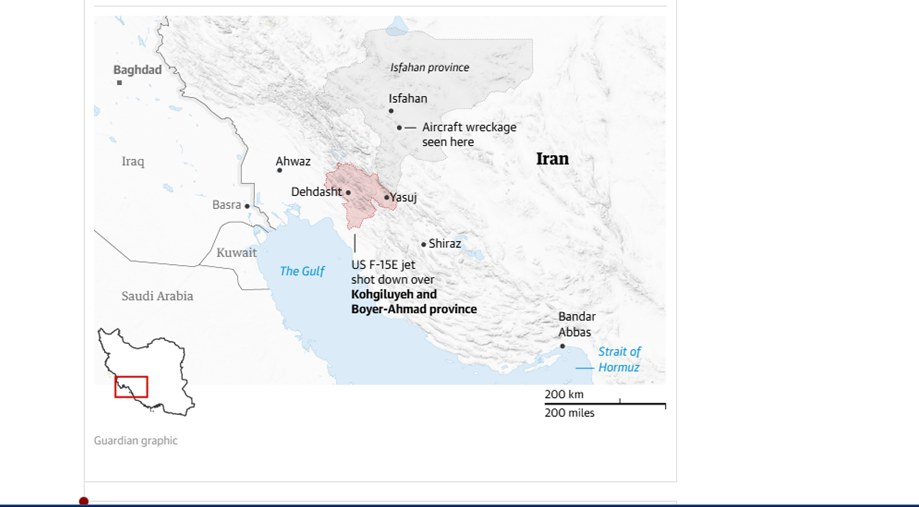
A U.S. military aircraft was shot down over Iran in early April, marking a significant escalation in tensions between Washington and Tehran. Both aircrew members successfully ejected and were later rescued in a complex operation, shifting the immediate narrative from confrontation to crisis containment.The incident, reported by major international media including CNN and BBC News, has drawn global attention not only for the downing of a U.S. aircraft but also for the successful recovery of personnel under high-risk conditions.
From Escalation to Containment
The downing of the aircraft represents one of the most direct military confrontations between the United States and Iran in recent years.
A U.S. fighter jet—widely reported as an F-15E—was struck while operating over Iranian territory. Both crew members ejected safely. One was quickly recovered, while the second remained unaccounted for for an extended period before being successfully rescued.
The incident raised immediate concerns of potential escalation, particularly given the sensitive geopolitical and military context of the region.
High-Risk Rescue Operation
The rescue effort quickly became the central focus of international coverage.
U.S. forces conducted a coordinated operation involving intelligence assets, air support, and special operations capabilities to extract the remaining crew member from a remote area.
“The recovery of both personnel represents a critical success in a high-risk environment,” analysts noted.
The operation not only demonstrated operational reach but also avoided a scenario that could have dramatically escalated tensions—namely, the capture of U.S. personnel.
Strategic Implications
The dual nature of the incident—a successful shootdown followed by a successful rescue—highlights a complex strategic reality:
Iran demonstrated its ability to challenge U.S. air operations
The United States demonstrated its capacity to recover and respond
Both sides avoided immediate escalation beyond control
This balance reflects a form of contained confrontation, where signals are exchanged without crossing into full-scale conflict.
⚡ Energy and Global Impact
The incident unfolds against a backdrop of heightened sensitivity around global energy markets, particularly in relation to the Strait of Hormuz.
Any sustained escalation in U.S.–Iran tensions could have immediate consequences for:
Global oil supply
Energy pricing
Regional maritime security
The ability to contain the immediate fallout of this incident may have helped prevent further disruption.
A Crisis Contained, Not Resolved
While the successful rescue has eased immediate escalation risks, the underlying tensions remain.
The incident underscores the fragile balance in the region—where military engagement, political signaling, and global economic interests intersect.
🌐 About TSGL
Times Square Global Live (TSGL) is an international media platform based in New York, dedicated to covering United Nations affairs, global governance, sustainable development, and international cooperation. Through multilingual reporting and a global perspective, TSGL provides accurate, responsible, and public-interest journalism to a worldwide audience.
 中文
中文  ENGLISH