Global Leaders Convene at UN Headquarters for Nature Summit High-Level Luncheon
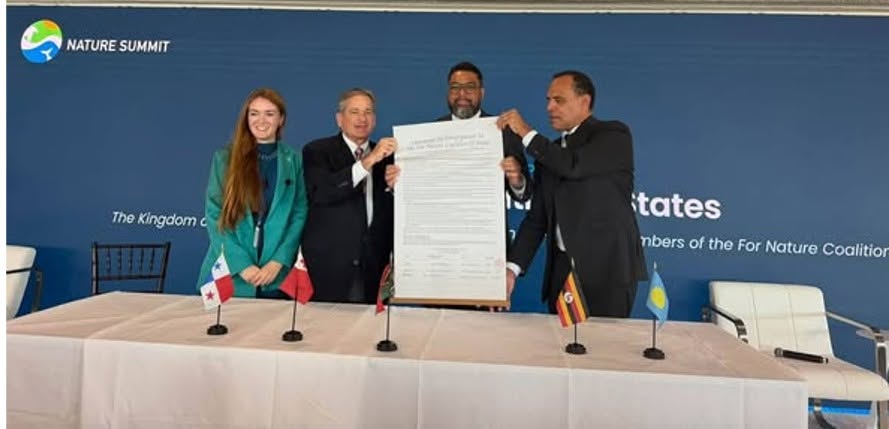
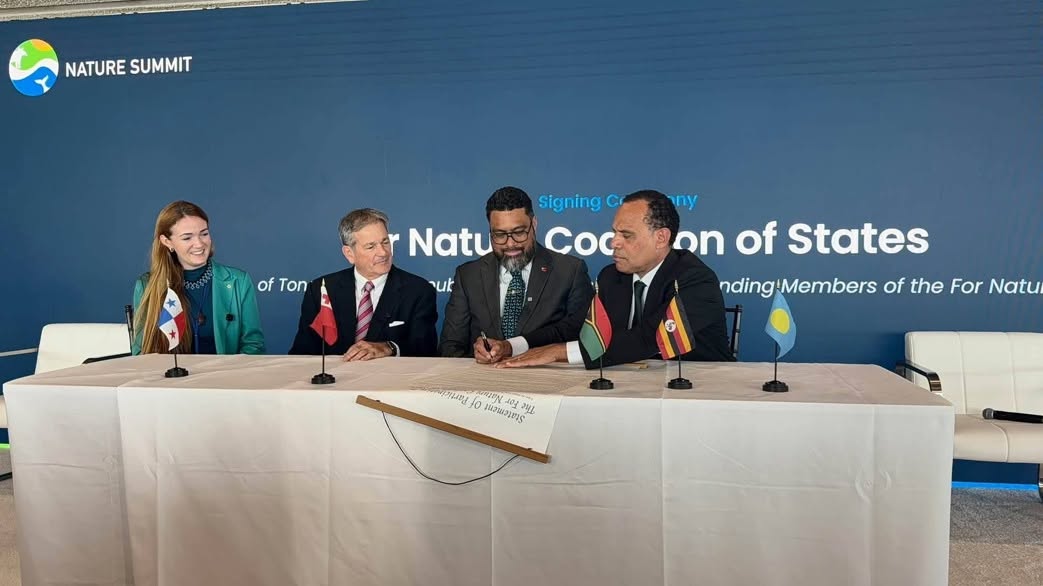
NEW YORK, September 24, 2026 (Times Square Global Live)** — The Nature Summit High-Level Leadership Luncheon was held Thursday afternoon at United Nations Headquarters in New York during the High-Level Week of the 81st Session of the United Nations General Assembly.
Under the theme **“Protecting Nature. Financing Resilience. Scaling Impact,”** the invitation-only gathering brought together heads of government, environment ministers, representatives of international organizations, investors, business leaders and philanthropists to explore cross-sector partnerships addressing sea-level rise, biodiversity loss and the accelerating impacts of climate change.
The luncheon was chaired by **The Hon. Lord Fatafehi Fakafānua, Prime Minister of the Kingdom of Tonga**. As a Pacific island nation on the front lines of the climate crisis, Tonga faces increasing threats from rising seas, coastal erosion, saltwater intrusion and extreme weather.
Participants emphasized that Small Island Developing States and low-lying coastal countries contribute relatively little to global greenhouse gas emissions but continue to bear a disproportionate share of the consequences. They called for stronger international cooperation, more accessible climate finance and practical partnerships capable of translating global commitments into measurable results.
Among the senior government representatives attending the luncheon were Juan Carlos Navarro, Minister of Environment of Panama, and Ralph Regenvanu, Vanuatu’s Minister of Climate Change Adaptation, Energy, Environment, Meteorology, Geo-Hazards and Disaster Management.
Discussions included a session titled **“Putting Nature on the Sovereign Balance Sheet,”** which examined how governments can recognize forests, oceans, rivers, wetlands, biodiversity and clean water as strategic national assets.
Speakers noted that natural ecosystems support food and water security, livelihoods, economic development, climate stability and disaster protection. Incorporating the value of natural capital into public policy, national budgets and investment decisions could therefore create new pathways for financing conservation and strengthening climate resilience.
The session was moderated by Matthew Tranchin, Founder and Chairman of Global Resilience Partners. Tranchin works at the intersection of government, finance and sustainable development, connecting governments, investors, family offices, foundations, companies and civil-society organizations to structure public-private-philanthropic partnerships.
Also attending was Amir Dossal, Vice Chair of Global Resilience Partners and Founder and CEO of the Global Partnerships Forum A 25-year veteran of the United Nations, Dossal served as the founding Executive Director of the United Nations Office for Partnerships. Throughout his career, he has helped build partnerships among the United Nations, governments, businesses and philanthropic institutions to mobilize resources for sustainable development.
Henk Rogers, Co-Founder of The Tetris Company, Founder of Blue Planet Alliance and an international clean-energy advocate, also participated in the luncheon. Rogers has long promoted the transition of Pacific island nations and other climate-vulnerable communities toward 100 percent renewable energy by 2045.
The luncheon also marked the launch of the For Nature Coalition of States, an initiative advanced by Panama and Tonga. The coalition is designed as an informal, decentralized and voluntary platform through which interested United Nations Member States can exchange experiences, share perspectives and contribute to continuing discussions surrounding a proposed Universal Declaration of the Rights of Nature under the United Nations Harmony with Nature Programme.
**Winny Power**, Founder and Editor-in-Chief of Times Square Global Live and Chief Representative to the United Nations (USA) and Director of International Affairs for Track Nepal, attended the high-level luncheon and exchanged views with government officials, international development leaders and climate-action advocates.
The gathering delivered a clear message: nature must no longer be treated simply as a resource to be consumed in the pursuit of economic growth. It should be recognized as a foundation of national security, economic resilience and long-term prosperity.
As sea-level rise and other climate risks intensify, participants stressed that declarations and commitments must be followed by implementation—bringing together policy, capital, technology and international cooperation to protect both vulnerable communities and the natural systems upon which humanity depends.

 中文
中文  ENGLISH